



Climbing gear has to solve a difficult equation: it needs to be light enough for fast movement, strong enough for harsh terrain and precise enough to support performance when conditions get technical. The Climbing winners of the European Outdoor Award 2026 show two different sides of that challenge. The Mountain Equipment Tupilak 37+ focuses on how an alpine climbing pack can become lighter, stronger and more weather-resistant through material and construction. The C.A.M.P. Aeris shows that helmet innovation is not only about chasing the lowest possible weight, but about balancing protection, comfort and usability. Together, they show where modern climbing equipment is heading: less compromise, more precision and gear that is built around real movement in steep terrain.
Why climbing gear is becoming more precise
In climbing, every piece of equipment has to justify its place. A pack should carry gear securely without getting in the way. A helmet should protect without feeling restrictive. Materials need to handle abrasion, weather and repeated use, while still keeping weight low. But the strongest new climbing gear is not simply lighter. It is more carefully engineered. Details such as bonded construction, reduced seams, fit, carry comfort and protection zones can make a bigger difference than one headline spec alone. Modern climbing gear is therefore moving from simple weight reduction toward smarter construction.
1. Mountain Equipment Tupilak 37+: A climbing pack built around material innovation
 Mountain Equipment
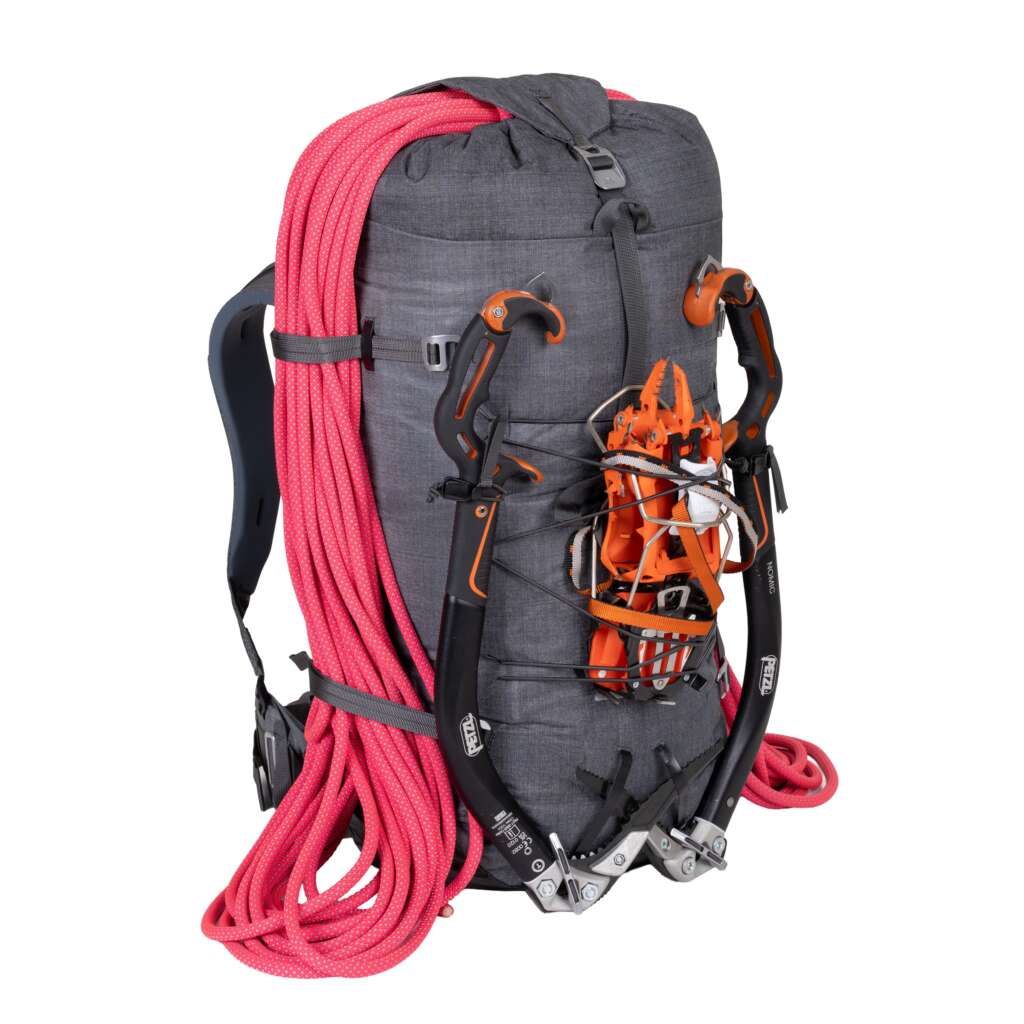
The Mountain Equipment Tupilak 37+, Gold Winner in the Climbing category, was developed with a clear goal: to create a better alpine climbing pack. According to the interview, Mountain Equipment wanted the new generation to be lighter, stronger and more comfortable than before, while staying focused on the needs of serious climbers and mountain guides.
The Tupilak 37+ shows that climbing pack innovation is not just about using a new fabric. The real story is how the material changes the construction. By reducing seams, bonding panels and focusing on high-wear details, Mountain Equipment turns weight saving into a broader performance benefit: lighter carry, better durability and more weather-resistant handling in alpine conditions.
Key features include:
- ALUULA fabric: Ultra-high molecular weight PE material with strong tear strength, abrasion resistance and UV resistance.
- Bonded construction: Opens up lighter construction options compared with traditional sewing.
- Reduced seams: Helps save weight and improve weather resistance.
- One-piece panel design: Reduces unnecessary material and potential weak points.
- Welded compression attachment points: Built for durability and clean construction.
- Laser-cut daisy chain: Adds functionality without adding unnecessary bulk.
- Target group: Elite climbers, professional mountain guides and users who do not want to compromise on kit.
- Core use case: Alpine climbing and demanding mountain objectives.
Could your product be the next award winner?
Let consumers test and rate your innovation directly – and turn real-world feedback into credible recognition.
2. C.A.M.P. Aeris: A climbing helmet that looks beyond lowest weight
The C.A.M.P. Aeris, Silver Winner in the Climbing category, brings the category’s second key product type into focus: head protection. In climbing, helmets are often discussed through weight, but the Aeris points to a more balanced approach. As highlighted in the award interview overview, the intention was not simply to create the lightest helmet on the market, but to rethink what a modern climbing helmet needs to deliver.
The Aeris is interesting because it challenges a common product-development reflex in climbing: make it lighter, then lighter again. For helmets, that logic has limits. A good climbing helmet needs to be comfortable enough to stay on, protective enough to inspire trust and practical enough for real mountain use. That makes the Aeris a useful counterpoint to the Tupilak 37+: one product pushes material and construction in a pack, the other reframes performance in protection equipment.
Key features include:
- Product type: Climbing helmet for technical mountain and climbing use.
- Design focus: Protection, comfort and usability rather than weight reduction alone.
- Performance logic: A helmet should be light enough to wear consistently, but not reduced to one spec.
- Category role: Adds the safety component to the Climbing winner set.
- Award ranking: Silver Winner in the Climbing category.
- Brand perspective: C.A.M.P. positions the product around a more complete understanding of helmet performance.
What these products say about the future of climbing gear
Seen individually, the two products solve very different problems. The Mountain Equipment Tupilak 37+ shows how advanced materials and cleaner construction can make an alpine climbing pack lighter, stronger and more weather-resistant. The C.A.M.P. Aeris shows that helmet innovation should not be reduced to the lowest possible weight, but should balance protection, comfort and usability. Seen together, they point to a broader shift in climbing gear: performance is becoming more precise. The future is not simply lighter packs and lighter helmets. It is equipment that removes friction in steep terrain while still protecting the climber and standing up to hard use. Good climbing gear does not win by doing one thing extremely well and ignoring the rest. It wins when material, construction, fit and protection work together in the real conditions climbers actually face.
