


Hiking gear is becoming more comfortable, but not in the soft or casual sense. The most interesting innovations are not simply adding more cushioning or padding. They are rethinking how the foot moves, how support is created and how comfort can last over longer distances. The Hiking winners of the European Outdoor Award 2026 show this clearly. The Sidas T-Free Hike, Hanwag LIGHTSTONE LOW and Sidas Custom Live Hike approach hiking comfort from three different angles: sock construction, shoe technology and personalized in-store fitting. Together, they show where modern hiking equipment is heading: more natural movement, more durable cushioning and more individual support.
Why comfort is becoming a performance factor in hiking gear
For long hikes and multi-day trekking, comfort is not a nice extra. It directly affects stability, fatigue, blister prevention and how efficiently hikers move over time. A hiking shoe should not only protect the foot, but keep cushioning consistent when the trail gets longer. A hiking sock should not only feel soft, but support natural movement and reduce friction. A hiking insole should not only add padding, but improve alignment and support inside the shoe. Better hiking gear is therefore not about making every product softer. It is about making comfort more functional, more stable and more specific to the way people actually walk.
1. Sidas T-Free Hike: A hiking sock built around the big toe
 Sidas
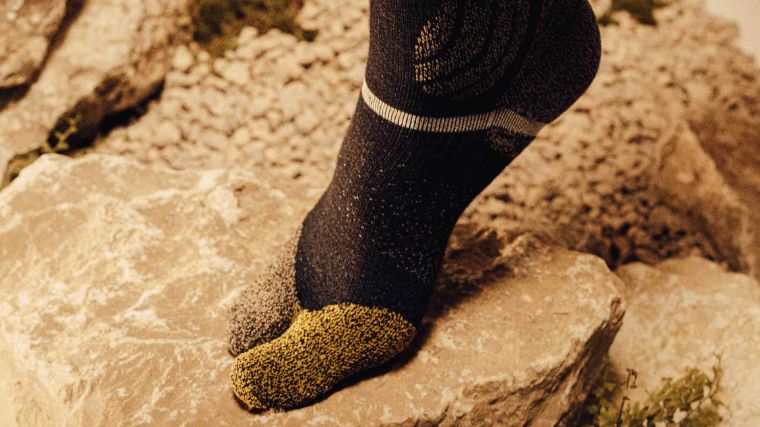
SidasThe Sidas T-Free Hike, Gold Winner in the Hiking category, takes a different approach to hiking sock construction. Instead of separating all five toes like traditional toe socks, it isolates only the big toe, focusing on its role in propulsion, balance and stability during walking and hiking.
The T-Free Hike shows that comfort can start with a small but precise design decision. By giving the big toe more freedom while keeping the rest of the sock easy to handle, Sidas turns natural foot motion into a practical hiking feature. For hikers, that means better stability, less friction and a more natural feeling over long distances.
Key features include:
- Big-toe separation design: Supports more natural movement, propulsion and stability.
- Comfort without full toe bulk: Avoids extra material between all toes and makes the sock easier to put on.
- Hiking-specific construction: Built for long-distance hiking needs.
- Seamless, non-compressive cuff: Reduces pressure during extended wear.
- Targeted cushioning zones: Protects areas such as heel, toes, Achilles tendon and ankle.
- Materials: Tencel®, cotton and polyamide.
- Retail price: €29.95.
Could your product be the next award winner?
Let consumers test and rate your innovation directly – and turn real-world feedback into credible recognition.
2. Hanwag LIGHTSTONE LOW: Running-inspired cushioning for long-distance hiking
The Hanwag LIGHTSTONE LOW, Silver Winner in the Hiking category, brings running-inspired cushioning into a hiking-specific platform. It is a low-cut hiking shoe developed for demanding multi-day tours, combining lightweight construction with durable materials and responsive comfort. The LIGHTSTONE LOW shows how hiking footwear is borrowing smartly from running without becoming a trail running shoe.
 Hanwag
The goal is not speed alone, but efficient comfort over distance: less fatigue, more rebound and a shoe platform that can keep performing after many kilometres on the trail. In the interview, Hanwag also highlights the economic side of durability: by combining lab data with retail price, the brand calculates a significantly lower cost per kilometre compared with tested trail running benchmarks.
Key features include:
- Super Critical Foaming midsole: Uses SCF-applied TPU components for cushioning, rebound and stability.
- Long-lasting comfort: Designed to keep cushioning consistent over extended use.
- Proven durability: The SCF midsole has been shown to last 5–11 times longer than conventional EVA midsoles.
- Durable outsole: Offers approximately twice the lifespan of conventional EVA materials.
- Upper materials: Suede leather and breathable textiles.
- Use case: Multi-day hiking and extended trekking.
- Retail price: €200.
3. Sidas Custom Live Hike: Personalized support directly in the store
SidasThe Sidas Custom Live Hike, Bronze Winner in the Hiking category, shifts the comfort discussion from the product shelf to the retail floor. It is a thermoformable hiking insole system that can be customized directly inside the customer’s shoe within minutes.
Custom Live Hike shows that comfort is not only about product design, but also about service design. By making personalization fast, scalable and store-based, Sidas gives retailers a clear advantage over standard online shopping while giving hikers more individual support inside their shoes. For modern hiking gear, this is a relevant shift: the right fit is not just selected, it can be created directly at the point of sale.
Key features include:
- Custom Live Thermoforming: Personalized in-shoe customization using heat and body weight.
- Fast fitting process: 2:30 minutes heating, 60 seconds standing and 1 minute walking.
- Multi-material construction: EVA shell, TPU reinforcement, PU cushioning pads and AMF top cover.
- Stable arch support: TPU reinforcement keeps support consistent during customization.
- Shock absorption: PU pads under the heel and metatarsals improve vertical comfort.
- Retail-focused concept: Includes Heat Cube machine, furniture modules and POS materials for a dedicated customization area.
- Retail price: €59.95.
What these products say about the future of hiking gear
Seen individually, the three products solve different comfort problems. The Sidas T-Free Hike gives the big toe more freedom for balance and propulsion. The Hanwag LIGHTSTONE LOW brings durable, responsive cushioning into long-distance hiking. The Sidas Custom Live Hike adds personalized support directly inside the shoe through an in-store fitting process. Seen together, they point to a bigger shift: hiking gear is becoming more precise. The future is not simply softer shoes, thicker socks or more padding. It is gear that supports natural movement, reduces fatigue, improves stability and adapts more closely to the individual hiker. Better miles are not created by one comfort feature alone. They come from a system that helps the foot move, absorb impact and stay supported for longer.
