



A free place on an outdoor programme removes only one barrier. Support from the It’s Great Out There Coalition (IGOT) has enabled Youth Adventure Trust to run activity days including canoeing, climbing, bushcraft, caving and archery. These experiences form part of a longer journey that combines repeated outdoor challenges with long-term one-to-one support, helping vulnerable young people build confidence, resilience and practical skills.
The charity works with 11- to 16-year-olds in Wiltshire, Swindon and Somerset. Its programmes are free to participants, their families and the schools or youth organisations that refer them. In 2026, its approach was recognised with the European Outdoor Award in the Diversity, Equity & Inclusion – Project category.
The organisation’s model shows why sustained contact matters, how progress can be measured over time and what outdoor organisations can do to widen participation beyond a single free activity day.
Since 1992
using outdoor adventure to support young people
2,260
young people supported since the organisation began
554,168
hours of participation facilitated
200
volunteers in the Trust’s team
01
What the European Outdoor Award meant
The European Outdoor Award recognised the work of the Youth Adventure Trust community and brought wider attention to the societal, economic and geographical barriers that still prevent many young people from benefiting from outdoor experiences.
- For staff and volunteers: recognition of the time and energy they put into mentoring and supporting young people.
- For young people and referral partners: reassurance that the programmes are designed to provide sustained support and opportunities that may otherwise be unavailable.
- For supporters: greater visibility and credibility that could strengthen partnerships and help the charity reach more young people.
02
Four programmes built around continuity
At Youth Adventure Trust, outdoor activity is the setting for a personal-development journey rather than the complete intervention. Regular sessions, reflection and ongoing support are organised around individual objectives. Each participant has repeated opportunities to try, reflect and try again while a consistent team gets to know the young person and their circumstances.
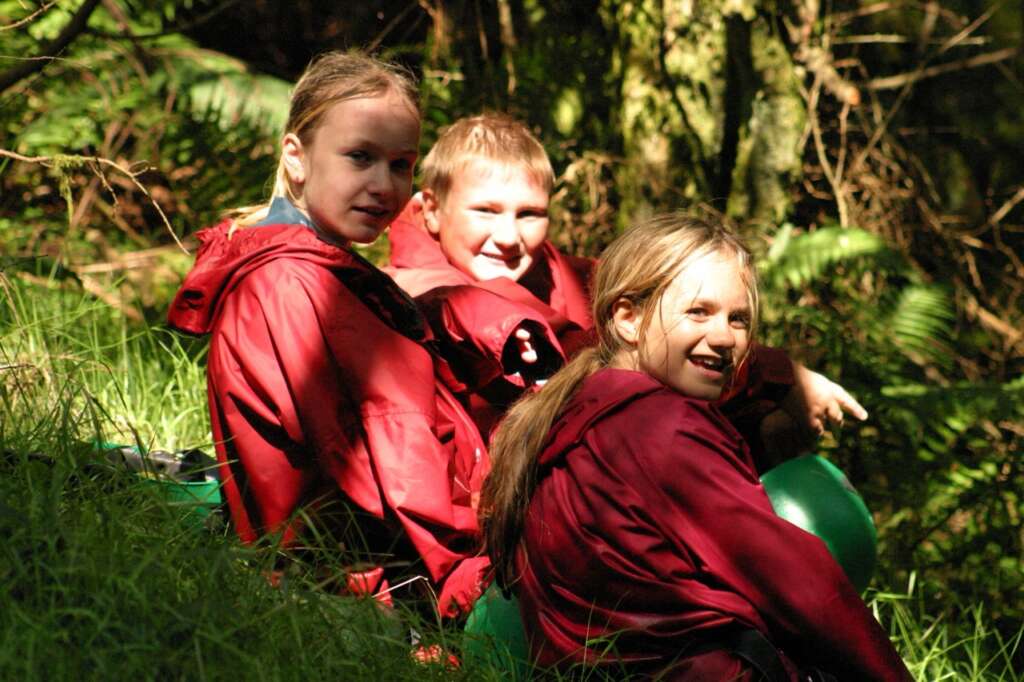
- YAT Adventure Programme: a three-school-year programme running from Year 7 to Year 9, with residential camps and activity days that help young people experience success, move beyond their expectations and develop confidence, resilience, self-esteem and social skills.
- YAT Resilience Programme: a year of monthly activities, home-based challenges and reflective practice, working towards the same personal-development outcomes.
- Mentoring Programme: additional individual support for young people who need it after completing another YAT programme.
- Bursary Programme: assistance for programme graduates taking their next steps into further positive activities.
In 2026, 240 young people are taking part in the Adventure Programme, 64 in the Resilience Programme and 15 in the Mentoring Programme. Participants are nominated by selected secondary schools and other youth organisations. The referral network includes 16 schools across Somerset, 21 across Swindon and Wiltshire, and the Young Carers Association.
School partners are selected by considering local need, deprivation data, OFSTED results, the number of pupils receiving Free School Meals or Pupil Premium, and the practicalities of delivery. The young people referred may be dealing with bullying, social isolation, low self-esteem, unstable home lives, caring responsibilities, rural isolation or difficulties moving from primary to secondary school.
“The Youth Adventure Trust is special because it provides opportunities that are otherwise unavailable. It helps give a boost to those that need an extra hand in life.”
(Carer)
03
Why free access is only the starting point
The programmes cover kit, food, accommodation and transport as well as the activities themselves. That removes major financial and logistical obstacles, but the hardest barriers are often social and emotional. Trauma, anxiety, low self-esteem or fear of an unfamiliar group can prevent a young person from taking the first step even when the place costs nothing.
- Financial pressure: activity fees, equipment and travel can all put participation beyond a family’s reach.
- Rural isolation: dispersed communities, limited transport and reduced youth provision make activities difficult to access. YAT’s programme data shows that half of the young people it supports do no extracurricular activities outside its programmes.
- Complex personal circumstances: participants may be managing caring responsibilities, domestic abuse, bereavement, bullying, school refusal or gang vulnerability.
- Perception and confidence: some young people have never walked in the mountains or swum in the sea and may not see the outdoors as a place where they belong.
Removing the price tag also does not change what happens between activities. A young person may return to a home environment without someone able to reinforce new strategies or confidence. Nor can one programme replace lost community youth services or solve limited local transport and opportunity on its own.
This is where the long-term model does most of its work. Programme Managers visit young people at home, meet them at school, provide one-to-one support during difficult moments and, when appropriate, contribute to meetings involving the wider team around a child. They can help a young person prepare for an unfamiliar activity, reflect afterwards and connect what happened outdoors with challenges elsewhere in life.
04
Why repetition matters more than a one-off experience
A single activity can be enjoyable, but it rarely provides enough time to build trust, process difficult emotions or practise new strategies until they become usable in daily life. Youth Adventure Trust therefore begins its personal-development work when participants are 11 or 12 and builds repeated challenge, reflection and support into the journey.
Outdoor activities make teamwork, communication, trust and leadership tangible. A young person can see what happens when they ask for help, keep going after a setback or take responsibility for part of a group task. Programme Managers then reinforce those skills through individual conversations and support at home or school. This continuity helps young people recognise their achievements and apply the strategies in other settings.
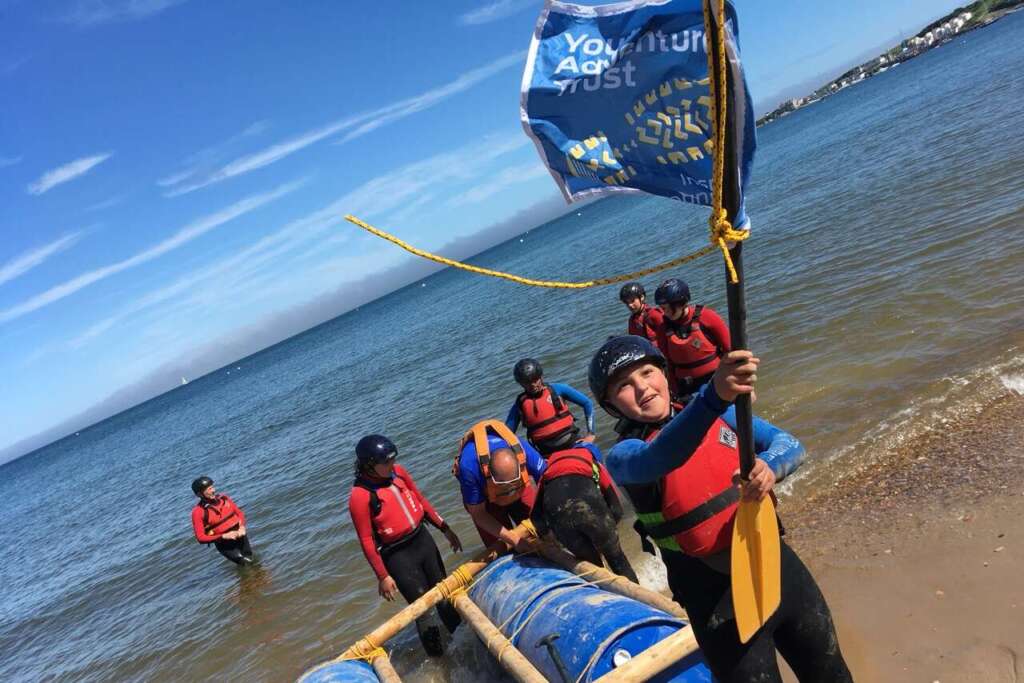
Former participants have reported milestones such as becoming the first person in their family to attend university, serving as a school prefect or competing at the Welsh Open Nationals. These are individual examples rather than universal outcomes, but they illustrate the range of goals participants have connected to skills developed during the programmes.
“Even now if there’s something I’m scared or worried about I just think of my time on YAT and think, I could do that, why can’t I do this. I just think that all the time and it’s really been a big help.”
(*Jessica)
05
Zach’s move from avoidance to a 70 metre zipline
Zach’s progression through the Resilience Programme shows what gradual change can look like. When he joined, anxiety was limiting how fully he took part in everyday life. He also had asthma, and both affected his attendance and willingness to attempt unfamiliar activities.
- His starting goals: improve his confidence in new situations and speak to new people.
- An early limit: halfway through the programme, he decided not to attend a high-ropes activity because it felt too difficult at that point.
- The turning point: as he kept attending other sessions, staff observed more open body language, more relaxed interaction and greater willingness to try.
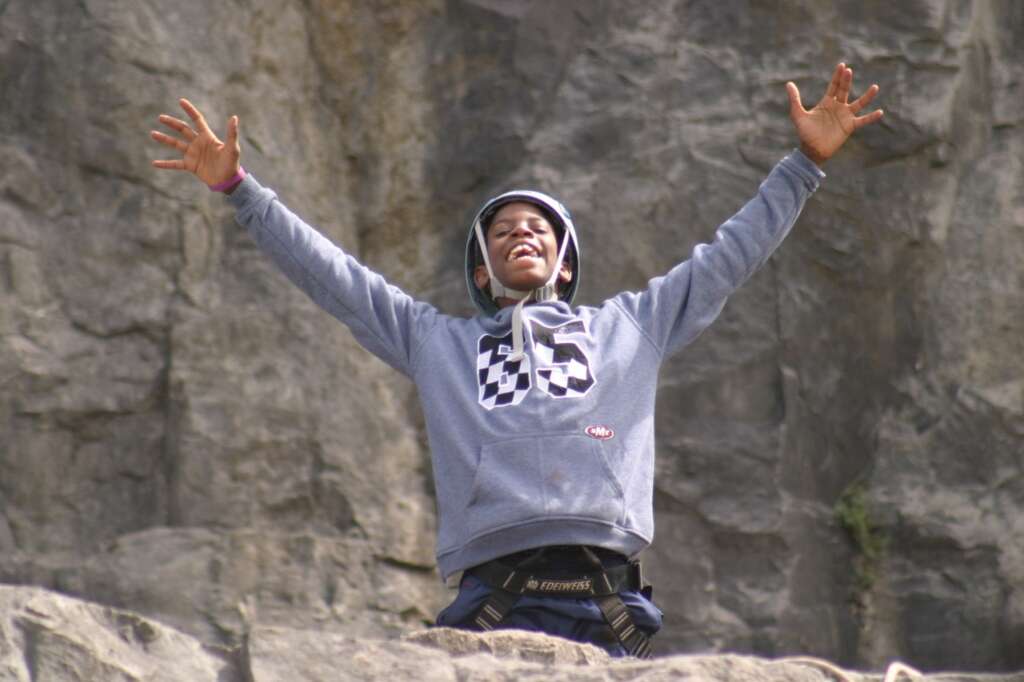
- The later challenge: on an overnight expedition, he completed a 70-metre zipline across a gorge with encouragement from adults and peers.
The significant change was not that Zach stopped feeling fear. He became more willing to consider a challenge before saying no and could draw confidence from things he had already achieved. His story also shows why progress should not be judged by a single activity: declining the high ropes was one moment in a longer process, not the end of it.
06
How Youth Adventure Trust measures progress
Youth Adventure Trust uses a psychometric questionnaire called MTQ4C to measure four areas of mental toughness: control, commitment, challenge and confidence. The questionnaire is completed at the beginning, middle and end of a programme. Programme staff use the results with participants to interpret progress and set individual objectives.
The quantitative results sit alongside regular one-to-one reviews, nightly Records of Achievement during camps, and surveys of young people, parents, carers and teachers. Feedback is collected after programme stages, at the end of the journey and for up to two years afterwards.
The Adventure Programme sets an end-of-programme target of 85% of participants reporting increased resilience, increased confidence and self-belief, and a more positive approach to challenge. The figures below show its 2025 end-of-programme outcomes.
96%
felt more confident and believed in themselves more
96%
felt more resilient
92%
felt they made better choices and took more responsibility
100%
would recommend Youth Adventure Trust to other young people
The 2025 Adventure Programme results also show that 96% felt they worked well with other people, 96% had challenged themselves and done more than they thought possible, and 96% enjoyed new experiences, places and people. Across all programmes, 98% of participants in 2025 felt more resilient, more confident and better able to try new things. In addition, 100% of parents and carers described the programmes as a positive experience for their child and said they would recommend the organisation.
These are programme-reported outcomes rather than an independent evaluation. Their value lies in the combination of repeated measurement, personal goal-setting and feedback from several perspectives, which gives staff more context than a single end-of-day questionnaire would provide.
“100% attendance in school, confidently doing her options choices and that’s because of you. That’s got nothing to do with the interventions we put in place in school. That’s all you”
(Teacher)
07
When long-term impact comes back as a volunteer
At a Mountain Camp in the Brecon Beacons, Mark Davey met a new volunteer and realised that she had attended a camp he supported in Scotland around 20 years earlier. Youth Adventure Trust had helped her through difficult times, and she now made a point of taking her own children outdoors.
At the end of our conversation, I told her that she had “made my day”, to which she replied “well, you’ve made my life!”
Mark Davey, CEO, Youth Adventure Trust
Volunteers remain central to delivery, with 200 people in the team. In 2025, they filled 187 volunteer places and contributed 9,856 hours. YAT calculates that contribution as the equivalent of 409 days and £132,563.20 if those hours had been paid at a living wage.
08
Growth without making promises the charity cannot keep
Expansion into a new area created one of the organisation’s most difficult periods. Even with an established programme, the Trust had to build relationships with new referral agencies, establish a supplier network and secure funding in a difficult economic climate. The central question was whether the charity could raise enough money year after year to deliver safely and consistently.
The response from local supporters, corporate partners and volunteers helped the organisation continue, but the experience reinforced a cautious principle: it will not open a programme unless it is confident it can fund the commitment over the long term. In 2026, the Trust extended the Resilience Programme into Wiltshire and the Adventure Programme into Somerset. Its longer-term aim is to offer the Adventure, Resilience, Mentoring and Bursary programmes across all areas served by its referral partners.
That ambition requires additional corporate partners, grant makers and individual donors. Growth is focused on giving each young person the form of support that fits their needs rather than limiting the offer by location.
09
What the outdoor industry can contribute
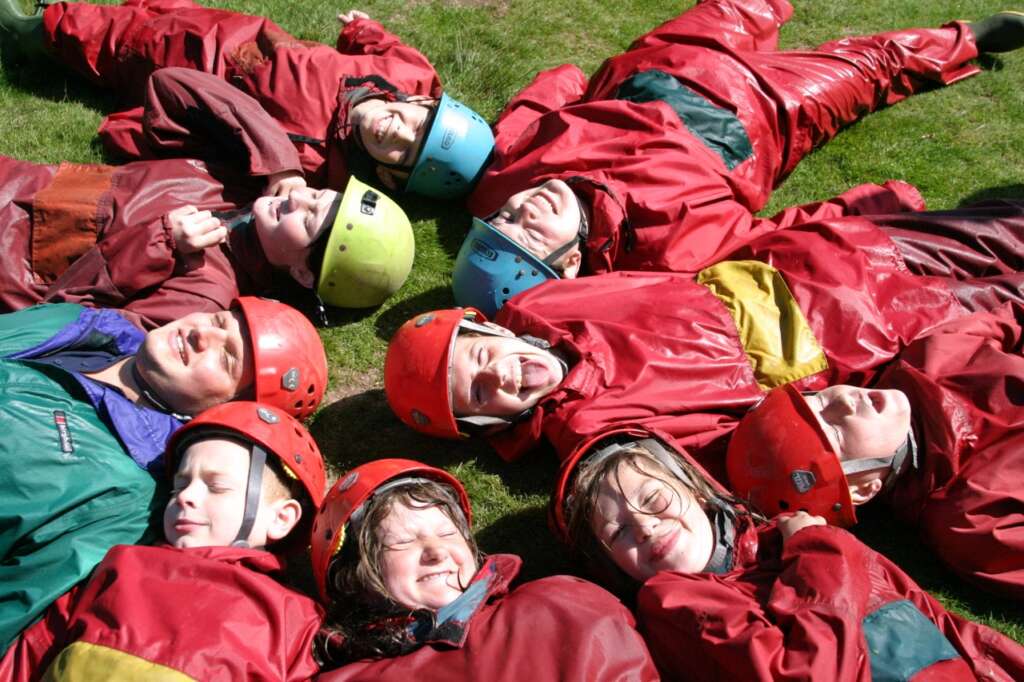
Support from the It’s Great Out There Coalition enabled Youth Adventure Trust to run activity days including canoeing, climbing, bushcraft, caving and archery. Those days act as stepping stones within a longer journey. They gave young people a place to practise teamwork, communication, problem-solving and decision-making while Programme Managers built the relationships needed for further support.
- Support continuity: one-off grants and product donations help, but longer partnerships allow charities to plan and keep commitments that can last up to three years.
- Fund the less visible costs: transport, equipment, food, accommodation and one-to-one staff time determine whether a free place is genuinely accessible.
- Start with manageable experiences: inclusion may begin with a small, supported activity rather than an expedition that feels out of reach.
- Show who the outdoors is for: communication and education should make opportunities visible to people across ages, genders, ethnicities and abilities.
- Listen to specialist partners: youth organisations understand the preparation, safeguarding and personal support participants need.
Youth Adventure Trust also runs corporate challenge events. Its annual Hike Bike Paddle event brings people from the sports and outdoor sector together outside the office. By its seventh year, the event had raised more than £200,000—enough to cover one year of programme costs for 156 young people.
By using the power of the outdoors to build resilience and combining it with one-to-one support to develop confidence over a number of years, we can truly inspire young lives and enable vulnerable young people to achieve more than they ever thought possible.
Mark Davey, CEO, Youth Adventure Trust
Learn more about Youth Adventure Trust, its programmes and ways to support its work. The European Outdoor Awards page includes the jury statement for the project, and current challenge events are listed on the Trust’s challenge calendar.
This programme is supported by the It’s Great Out There Coalition (IGOT), helping more young people access the outdoors and build confidence through adventure. To get involved, contact the IGOT team at info@itsgreatoutthere.com
